2026-08-25 ·
Common Thermostat Placement Mistakes in Sun-Facing Rooms
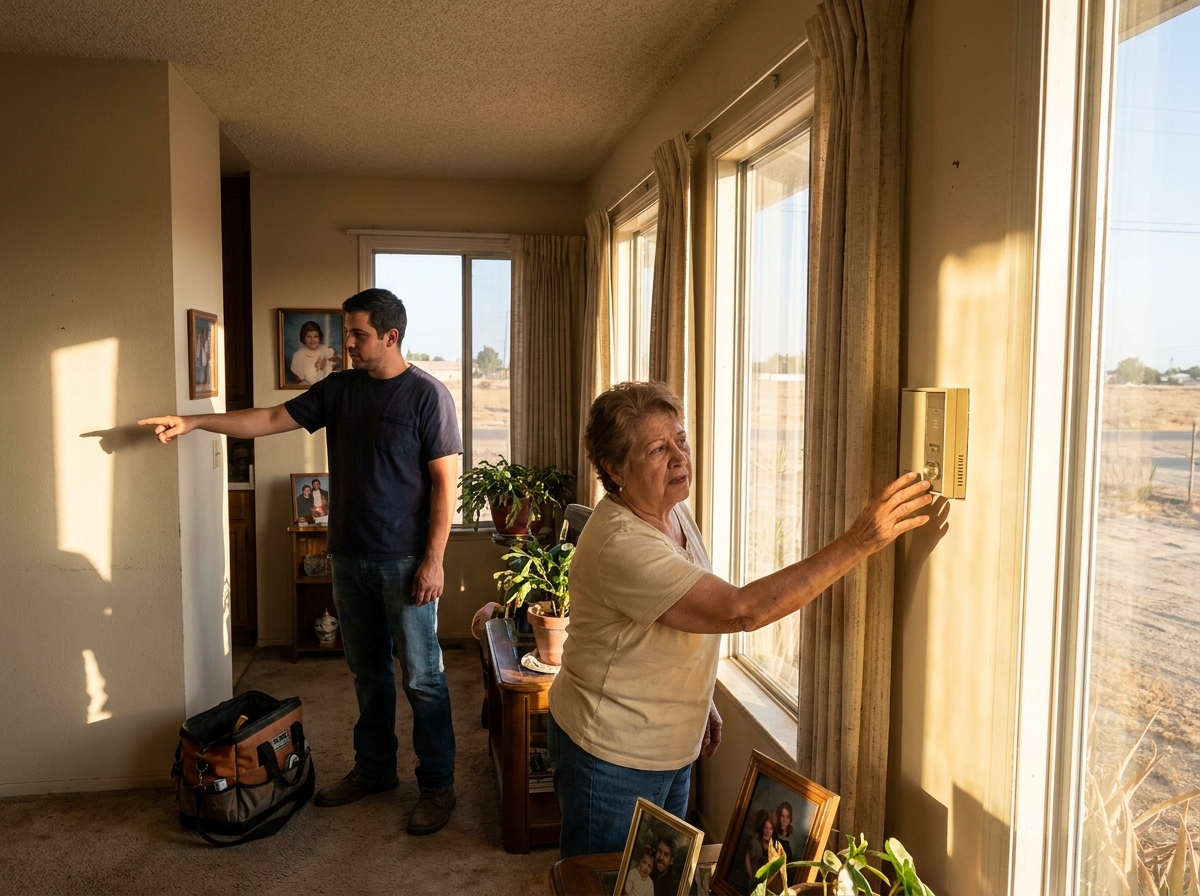
Placing a thermostat on a wall that receives direct afternoon sun in Bakersfield homes causes the sensor to read temperatures 8–15 degrees higher than the actual room average during peak summer hours. This forces the system to overcool other areas until the thermostat finally registers the set point, increasing runtime and wear on equipment throughout Kern County.
Direct Sunlight on the Thermostat Sensor
South- and west-facing rooms in homes across Oildale and Downtown Bakersfield sit under intense solar gain from May through October. When the thermostat sits on an exposed interior wall, the sun heats the sensor housing directly and the reading stays elevated even after the room air has cooled. Technicians regularly find units mounted 4–6 feet from large windows without any shade from curtains or blinds, which creates false high readings that keep the compressor running past the point where the rest of the house has reached comfort. Moving the device to an interior wall or adding a small shade block above it brings readings back in line with actual conditions. Homeowners in Rosedale often notice the difference within one billing cycle once the sensor stops baking in direct light.
Proximity to Windows and Heat Sources
Large picture windows common in Stockdale tract homes built in the 1980s and 1990s let heat radiate inward onto nearby thermostats. Placing the unit within three feet of glass or above a register that delivers conditioned air creates rapid temperature swings the sensor records as the whole-room condition. In Taft and Wasco properties with similar layouts, afternoon wind through open windows can also push hot outside air across the face of the thermostat, triggering extra cooling calls. Shifting the location at least four feet away from windows and registers, or to the opposite wall, eliminates these false triggers. Thermostat replacement becomes necessary when older mechanical units have warped from repeated heat exposure.
Incorrect Height or Wall Choice in Sun-Facing Rooms
Standard installation height of 5 feet works only when the wall stays out of direct sun. In many Bakersfield slab-on-grade homes, sun-facing rooms have higher ceilings that create temperature stratification; a thermostat mounted too low reads cooler air near the floor while the upper room stays hot. Mounting on an exterior wall that faces west adds conductive heat from the stucco or siding, especially during 100-plus-degree days. Relocating to an interior partition wall at the correct height gives the sensor a more stable sample of room air. See how to locate supply vents in slab-on-grade homes for additional guidance on airflow patterns that affect sensor accuracy.
Impact on System Efficiency in Bakersfield Summers
Bakersfield's hot desert climate pushes cooling loads hardest between 2pm and 7pm when west-facing rooms absorb the most heat. A misread thermostat extends compressor runtime by 20–40 minutes per cycle, raising monthly electric costs and shortening equipment life. Older homes in Oildale with single-pane windows compound the problem because the sensor never catches up to the actual heat load. Upgrading to a smart thermostat installation with remote sensors placed away from sun exposure allows the system to average multiple readings and cut unnecessary runtime. Regular checks during residential HVAC maintenance catch these placement issues before they drive up summer bills.
How to Correct Placement Mistakes
Start by observing the thermostat reading at 3pm on a clear summer day and compare it to a separate thermometer placed in the center of the room. If the difference exceeds 5 degrees, plan a relocation to an interior wall that stays shaded all afternoon. Mark the new spot at 5 feet high and away from returns or supplies. In homes where walls limit options, wireless sensors paired with a new control can average readings without running new wire. Review signs your thermostat needs replacement in older Bakersfield houses if the current unit shows physical damage from heat. Proper placement restores normal cycle times and keeps indoor temperatures steady without overworking the equipment.