2026-08-25 ·
How to Locate Supply Vents in Slab-On-Grade Homes
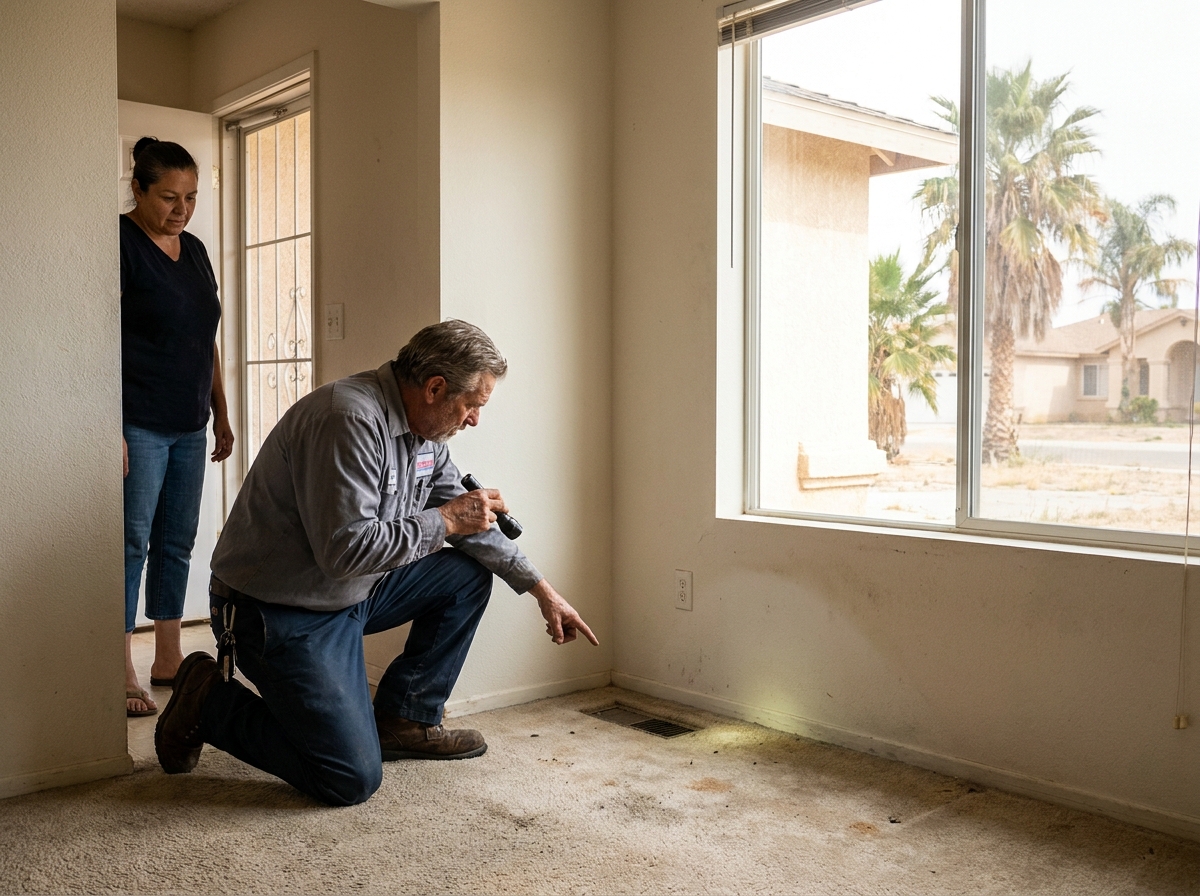
In slab-on-grade homes throughout Bakersfield, supply vents are most often found along exterior walls or central hallways, positioned 6 to 18 inches inward from the slab edge where flexible ducts run beneath the concrete. This pattern holds in neighborhoods such as Stockdale and Rosedale where post-1960s ranch homes dominate the housing stock. Homeowners start by checking baseboards for faint air movement or temperature differences during system operation, then confirm with a smoke pencil or infrared camera to trace the path from the air handler.
Understanding Slab-On-Grade Construction in Kern County
Bakersfield's hot desert climate with summer highs above 100 degrees drives builders to favor slab-on-grade foundations that keep cooling loads manageable. In Oildale and older sections of Downtown Bakersfield, many homes from the 1950s through 1980s feature 4-inch slabs poured over compacted soil with minimal insulation beneath. These slabs sit directly on the valley floor where seasonal temperature swings and occasional windblown dust from nearby oil fields affect duct integrity. Supply vents in these homes connect to rigid or flex ductwork embedded 12 to 24 inches below the finished floor, making surface-level detection essential before any floor covering work. Technicians note that homes near the Kern River show slightly deeper slab edges due to minor grading differences across the flat terrain.
Preparing Tools and Safety Steps Before Searching
Gather a stud finder rated for concrete, a thermal imaging camera, a shop vacuum with crevice tool, and a roll of painter's tape to mark findings. Wear knee pads and closed-toe shoes because searches often involve crawling along baseboards in attics or crawl-adjacent areas. Turn the system on at the thermostat and set it to fan-only mode so air movement becomes detectable. In neighborhoods like Rosedale, where homes sit on larger lots with sandy soil, check for any visible floor registers first before assuming all runs stay hidden under the slab. Clear furniture from suspected wall lines and vacuum baseboard gaps to avoid stirring decades of accumulated dust common after harvest seasons in surrounding agricultural zones.
Step-by-Step Process to Map Supply Vents
Begin at the air handler location, usually in a garage or closet, and trace the main trunk line outward along the slab perimeter. Run your hand along baseboards while the fan operates; cool air leakage often appears first near exterior walls facing south or west. Use the thermal camera to spot temperature drops along the 8- to 12-inch zone where ducts typically sit. Mark each suspected vent with tape, then confirm by drilling a small pilot hole only if necessary and only after shutting power to the unit. In Taft and Wasco homes with similar slab designs, technicians frequently find supply runs concentrated on the north side of living areas to balance the intense afternoon sun load. Document each location with photos before replacing any flooring.
Addressing Dust and Soil Conditions Specific to Bakersfield
Kern County's alkaline soils and frequent wind events introduce fine dust into slab-edge gaps, which can clog hidden supply vents over time. Homeowners near the California Living Museum or Buck Owens Crystal Palace often notice reduced airflow in rooms with south-facing walls because dust settles along the warmer slab perimeter. Vacuum accessible baseboard seams regularly and schedule duct cleaning when airflow drops noticeably. For homes in Stockdale built on older lots, check for any recent irrigation changes that could shift soil moisture and affect slab edges. These conditions differ from coastal regions and require extra attention to seal gaps after locating vents.
Knowing When Professional Help Is Needed
If supply vents remain undetectable after two hours of systematic checking, or if the home shows signs of prior slab penetrations, contact a local technician based at 3601 Ming Ave. Residents in Delano and nearby areas can reach the shop Monday through Friday 8am–6pm or Saturday 9am–2pm for on-site mapping. Technicians familiar with replacing evaporator coils in homes near oil fields understand how Kern County soil chemistry interacts with buried ducts. They also reference guidance from scheduling HVAC service around harvest season dust when planning work during peak agricultural activity. This approach prevents unnecessary slab cuts and keeps systems running efficiently through Bakersfield summers.