2026-08-25 ·
Signs Your Thermostat Needs Replacement in Older Bakersfield Houses
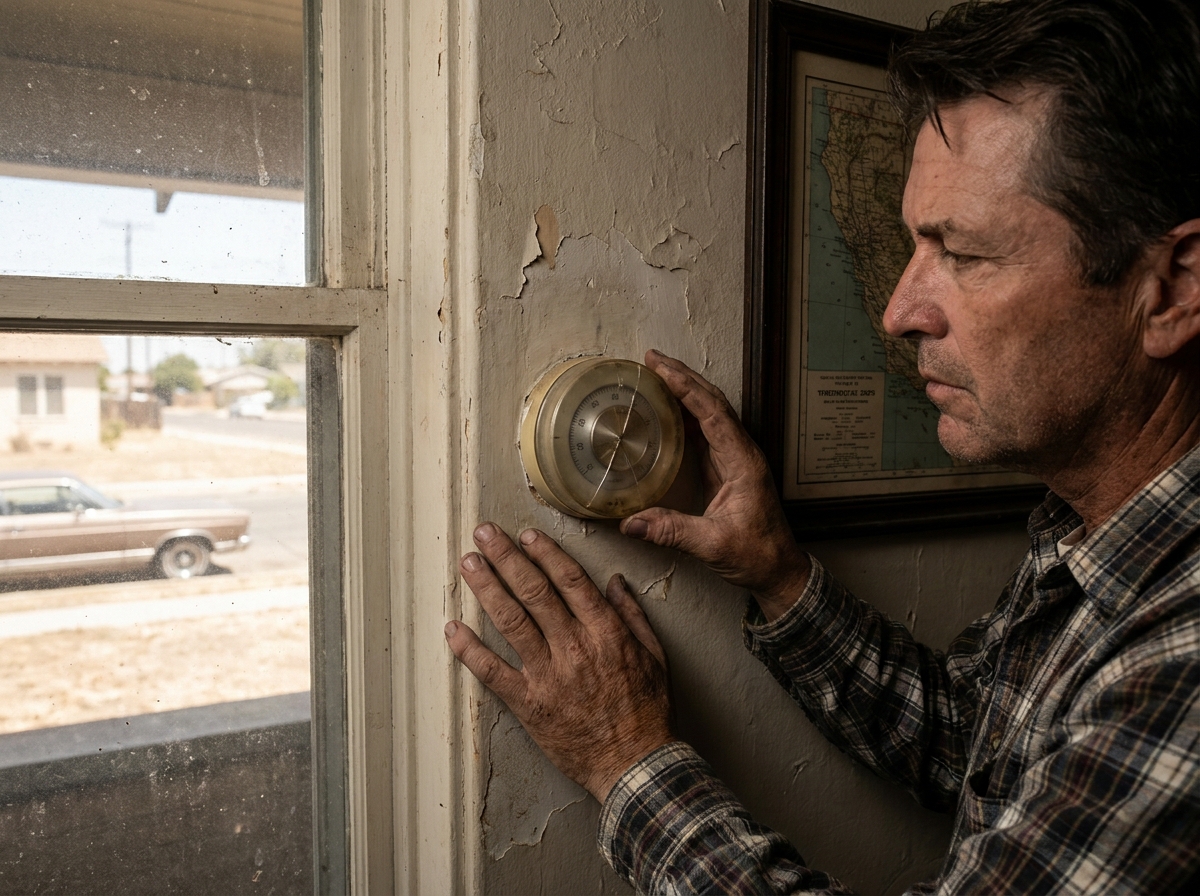
In older Bakersfield houses, thermostats typically need replacement after 8–12 years when they begin delivering inconsistent temperatures during the region's very hot summers. This shows up first in homes built before 1980 in areas such as Oildale and Downtown Bakersfield, where original mechanical units struggle with the desert climate swings that push systems harder than in milder nearby cities like Wasco or Taft.
Inconsistent Temperature Control in Stockdale and Rosedale Homes
Homes in Stockdale and Rosedale often retain original thermostats that fail to maintain steady settings once summer highs exceed 100 degrees. Residents notice rooms staying too warm even when the unit runs continuously, or sudden swings of 5–8 degrees that force manual adjustments multiple times a day. These patterns stem from worn sensors that no longer read ambient conditions accurately in single-story ranch houses common to these neighborhoods. The hot desert climate accelerates contact corrosion inside older units, turning minor drift into full failure within one or two seasons. Checking the display for erratic readings during peak afternoon heat provides an early clue before the entire HVAC system cycles inefficiently.
Electrical and Response Issues Common in Pre-1980 Kern County Houses
Older Bakersfield houses frequently contain wiring that has degraded from decades of high-load AC use, causing thermostats to stop responding to set-point changes. Homeowners report units that require repeated button presses or fail to turn the system on until the breaker is reset. In Oildale especially, where many properties date to the 1950s–1970s, low-voltage wiring runs through walls that have settled, creating intermittent connections. This leads to short cycling or complete lockout during the longest heat waves. Testing by removing the cover and inspecting for loose wires or burned terminals often confirms the need for full replacement rather than continued troubleshooting.
Physical Wear and Calibration Drift After 10 Years
Mechanical thermostats in Downtown Bakersfield homes show visible signs such as cracked covers, loose dials, or mercury bulbs that no longer level correctly after 10–12 years. Calibration drift causes the system to run 3–5 degrees off the actual room temperature, increasing runtime and wear on compressors. The constant expansion from extreme daily temperature swings in Kern County speeds up internal spring fatigue. When a unit displays these physical changes alongside rising energy use, replacement restores accurate control without repeated service calls. Thermostat replacement addresses these issues directly by installing modern digital models designed for desert conditions.
Upgrading Options for Smart Controls in Older Stock
Many owners of older houses in Rosedale and near the Kern County Museum choose to replace failing thermostats with programmable or smart models that better match the demands of very hot summers. These units learn occupancy patterns and adjust earlier in the day, reducing strain during peak hours. Installation requires verifying compatibility with existing 24-volt systems common in pre-1980 homes. Smart thermostat installation often pairs well with an overall residential HVAC maintenance visit to inspect ducts and coils at the same time. The result is steadier comfort without the frequent on-off cycling that shortens equipment life in Bakersfield's climate.
When Replacement Beats Repair in Local Conditions
Repairing an 8–12-year-old thermostat in Bakersfield older homes rarely makes sense once multiple signs appear together, because parts for legacy models are scarce and labor costs approach the price of a new digital unit. Persistent issues after basic resets or battery changes indicate deeper sensor or circuit failure worsened by the area's alkaline dust and heat. Scheduling evaluation during shoulder seasons avoids emergency calls when temperatures spike. Replacing the thermostat promptly protects the rest of the HVAC equipment from unnecessary runtime in neighborhoods where summer cooling loads remain high for months.