2026-08-25 ·
How Agricultural Dust Affects HVAC Filters in Kern County
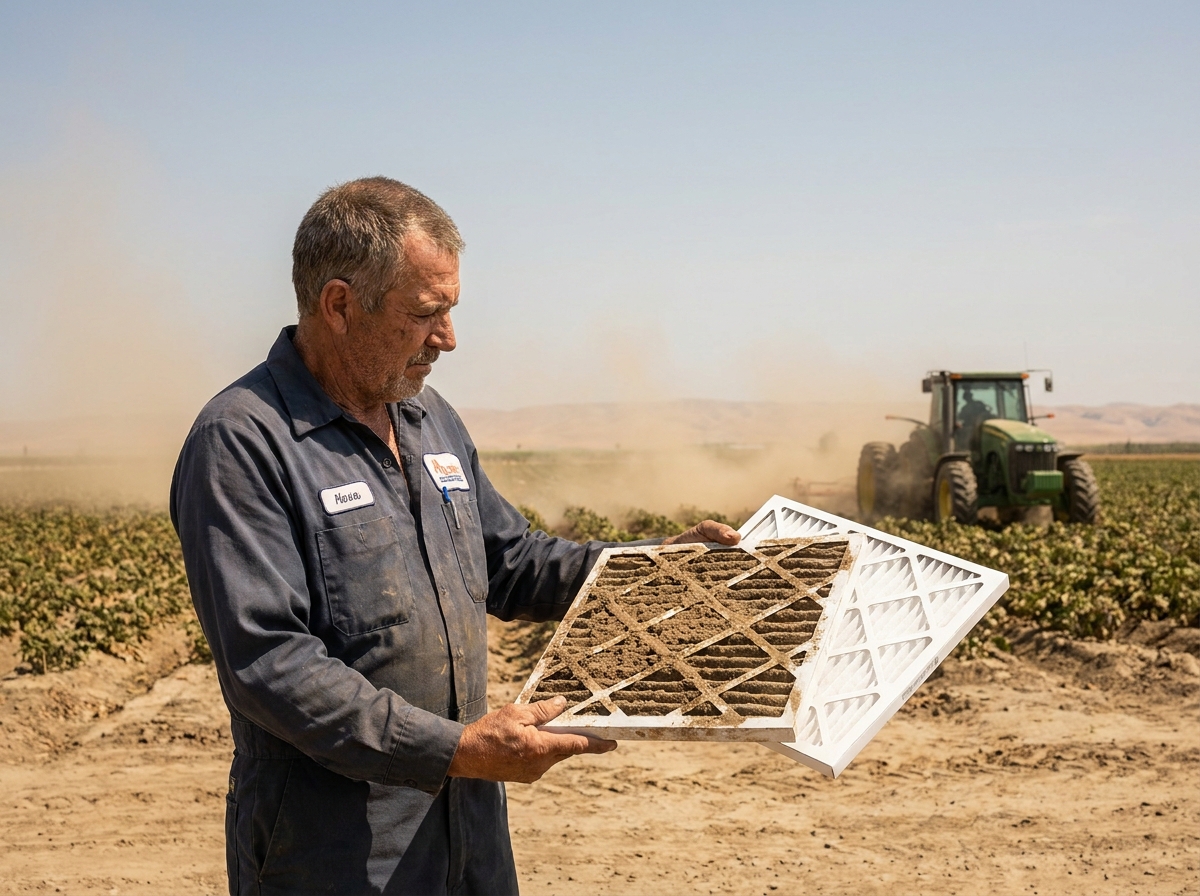
In Kern County agricultural dust from surrounding fields cuts typical HVAC filter lifespan to 3-6 weeks during harvest peaks instead of the usual 90 days. This dust travels on prevailing winds into Bakersfield neighborhoods such as Rosedale, Stockdale, Oildale and Downtown Bakersfield, where hot desert summers keep systems running long hours and pull in more particulates through return vents.
Sources of Agricultural Dust in Kern County
Kern County ranks among California's top producers of almonds, pistachios, grapes and cotton. Tilling, harvesting and wind erosion release fine silica and organic particles that drift 10-20 miles from fields near Delano, Wasco and Taft. These particles measure 2.5-10 microns, small enough to pass standard fiberglass filters yet large enough to pack tightly once trapped. Summer temperatures above 100 degrees keep HVAC blowers operating 12-18 hours daily, increasing the volume of air and dust pulled through every system. Homes built before 1990 in Oildale often have older ductwork with more leakage points that let additional dust bypass filters entirely.
Impact on Filter Lifespan and Performance
Standard 1-inch fiberglass filters reach 80 percent capacity in 25-35 days when exposed to Kern County farm dust. Pleated 2-inch filters last 45-60 days before static pressure rises enough to reduce airflow by 15-20 percent. Restricted airflow forces the blower motor to work harder, raising electricity use and shortening equipment life in the intense summer heat. In Stockdale and Rosedale subdivisions, residents report filters turning dark gray within a month when nearby orchards are harvested. Replacing filters at this interval prevents the system from running with elevated pressure that can crack heat exchangers or freeze evaporator coils.
Signs Your Filter Needs Attention
Watch for these measurable changes: supply vents delivering noticeably weaker airflow, indoor temperatures rising 2-3 degrees above thermostat settings on 105-degree afternoons, or visible dust buildup on furniture within days of cleaning. In homes near the California Living Museum or Buck Owens Crystal Palace, where open terrain allows more wind-borne dust, these signs appear earlier. A simple test involves holding a tissue against a return vent; if it stays flat after 30 seconds the filter is likely overloaded. Checking filters monthly from May through October catches problems before they affect the entire system.
Recommended Maintenance Practices
Switch to a MERV 8-11 pleated filter sized for your return and mark the calendar for 30-day checks during harvest months. Vacuum the filter housing and return grille each time you change the filter to remove loose dust that would otherwise load the new media immediately. Pair this habit with filter replacement service when schedules get busy. For homes showing persistent dust issues, indoor air quality improvement options such as whole-home filtration can capture finer particles before they reach the coil. Residents in Bakersfield can review seasonal patterns on the Bakersfield city page and compare experiences in the article What Homeowners Notice After Switching to a Higher MERV Filter.