2026-08-25 ·
Troubleshooting Noisy Air Handlers in Two-Story Homes
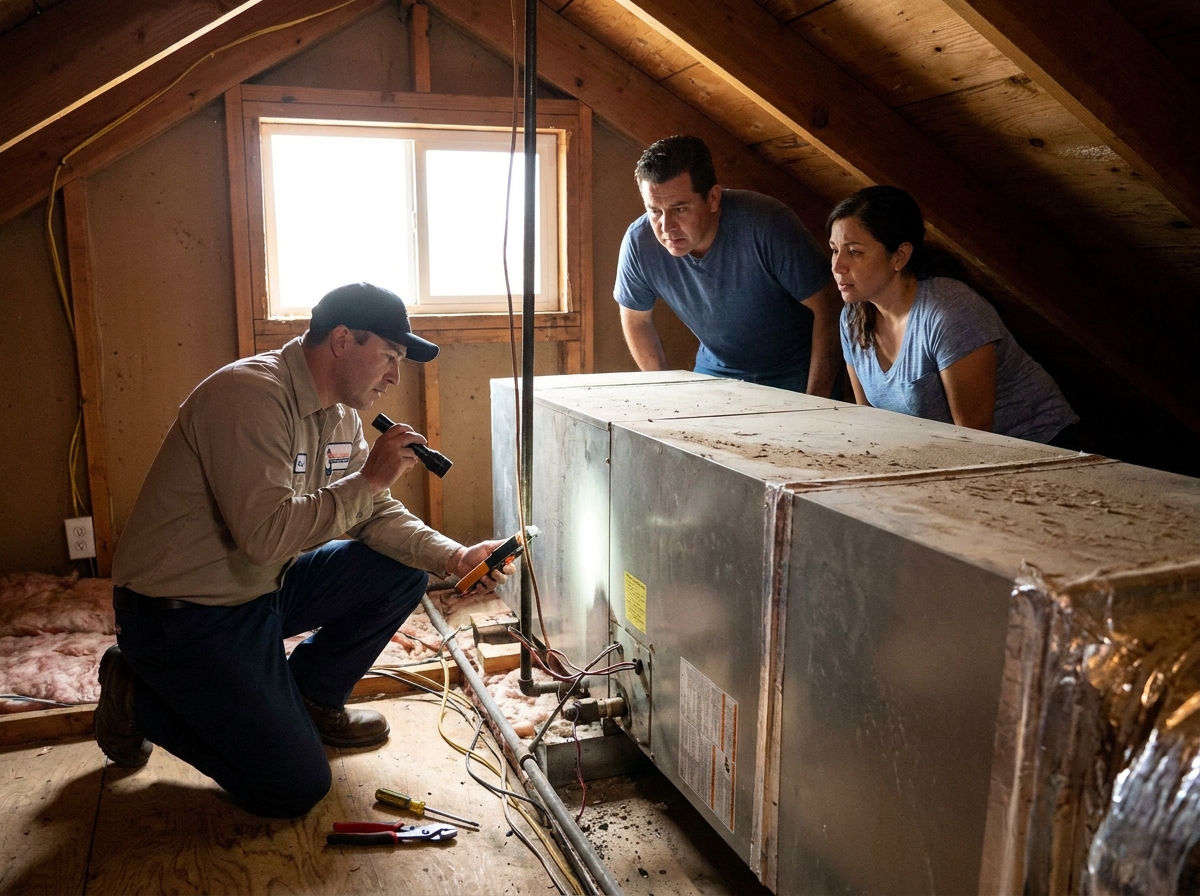
In two-story homes throughout Bakersfield, noisy air handlers most often result from unbalanced blower wheels or loose cabinet panels that vibrate when the unit runs continuously in 100-plus degree heat. These issues appear frequently in Stockdale and Rosedale neighborhoods where two-story layouts route return air through long vertical chases that amplify sound between floors.
Identifying Vibration Sources in Attic-Mounted Units
Two-story homes built before 1990 in Oildale and Downtown Bakersfield commonly place air handlers in attics where summer attic temperatures exceed 130 degrees. This heat accelerates bearing wear on the blower motor, creating a rhythmic hum that travels down supply ducts into bedrooms on the second floor. Check the motor mount bolts first by removing the access panel and tightening any that show play. Next inspect the blower wheel for dirt buildup that throws it out of balance; a quarter-inch layer of dust on the blades is enough to create noticeable thumping at 400 CFM. If the noise persists after cleaning, measure the wheel for wobble with the unit running at low speed.
Ductwork Issues Specific to Two-Story Layouts
Vertical duct runs between floors in Kern County homes often lack proper strapping, allowing the metal to flex when the blower starts. This flexing produces a banging sound that homeowners in Wasco and Delano report most during the first cool-down cycle after sunset. Walk the accessible duct sections and look for missing or loose 1-inch wide straps every 4 feet on horizontal runs and every 6 feet on vertical risers. Adding a short piece of flexible connector at the air handler discharge can break the vibration path before it reaches the second-floor registers. Homes near the California Living Museum also see extra pollen loading that restricts filters and forces the blower to work harder, increasing noise.
Step-by-Step Troubleshooting Sequence
Begin with the thermostat set to fan-only mode so the air handler runs without the condenser. Listen at each floor to determine whether the noise originates at the unit or travels through the ducts. Remove and inspect the filter; a clogged 1-inch filter raises static pressure and makes the motor labor, often creating a high-pitched whine. If the filter is clean, shut power at the disconnect and check the capacitor voltage rating against the motor nameplate. A weak capacitor causes the motor to hum without starting smoothly. Reassemble and run the unit through a full cycle while noting any change in sound after 15 minutes of operation when components reach operating temperature.
When Professional Service Becomes Necessary
If tightening panels and cleaning the blower does not reduce noise below normal levels, the motor or wheel likely needs replacement. Local homes in Taft and nearby rural areas often operate units 8–12 years before bearings fail under constant summer duty. Schedule Residential Hvac Maintenance to have the entire system checked for proper static pressure and refrigerant charge, since low charge can also affect blower performance. For persistent duct-related noise, Duct Cleaning removes debris that restricts airflow and contributes to turbulence. Readers dealing with placement issues may also find value in Common Thermostat Placement Mistakes in Sun-Facing Rooms. Service from the shop at 3601 Ming Ave covers these calls Monday through Friday 8am–6pm and Saturday 9am–2pm.