2026-08-25 ·
Replacing Evaporator Coils in Homes Near Oil Fields
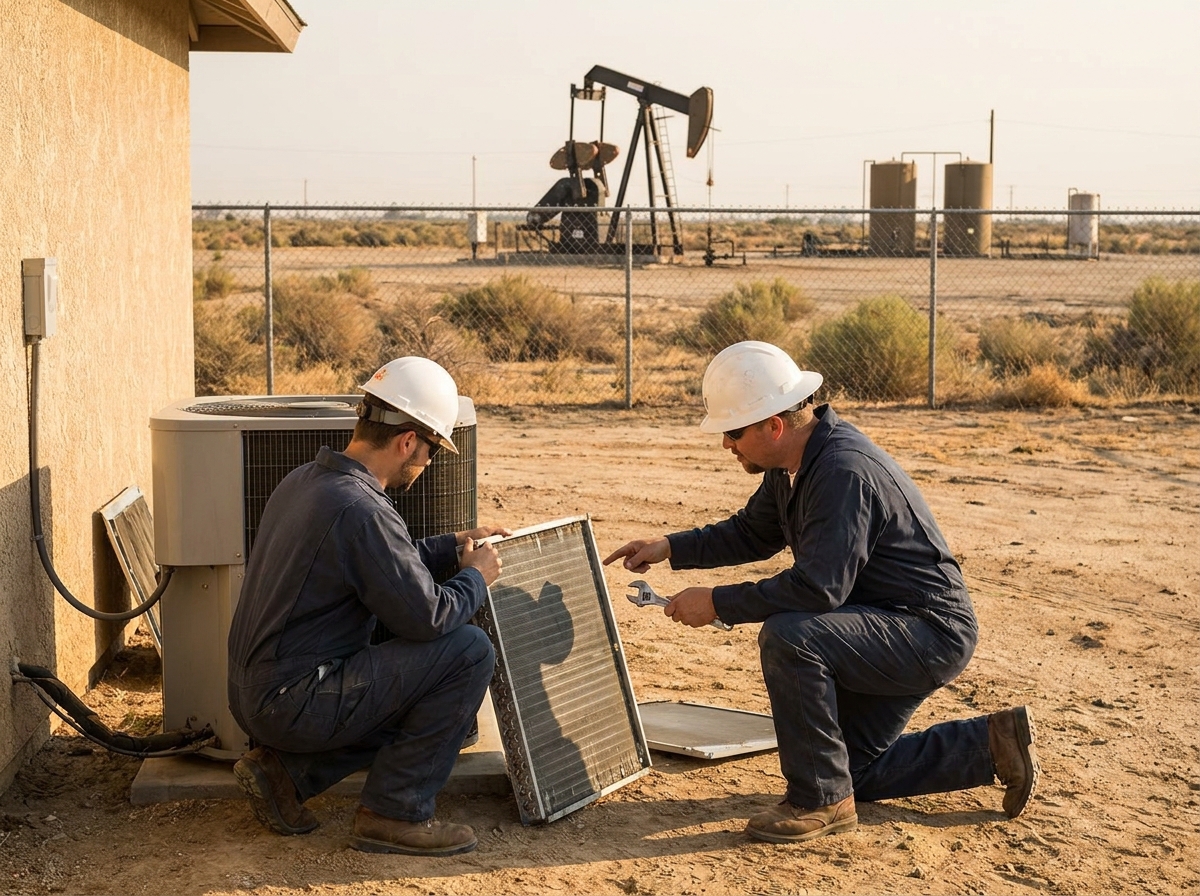
In Bakersfield homes near oil fields, replacing evaporator coils typically takes 5-7 hours and runs $900-$1600 for a standard 3-5 ton unit once pitting or leaks develop from airborne contaminants. The hot desert climate pushes systems harder each summer, while dust from nearby fields settles on coils and speeds up corrosion in neighborhoods like Oildale and parts of Taft.
Dust and Contaminants from Local Oil Fields
Oil field operations around Oildale, Wasco, and Taft release fine particulates that travel into residential HVAC systems. These particles coat evaporator coils faster than in cleaner areas like Stockdale or Rosedale, reducing airflow and forcing the compressor to work longer cycles during 100-plus degree days. Over 8-12 years, the combination of alkaline dust and constant heat thins copper tubing until pinhole leaks form. Technicians often find gray film buildup inside the cabinet that standard filter changes miss. Regular visual inspections during maintenance visits catch early etching before full replacement becomes necessary. Homeowners in these zones benefit from checking coil surfaces twice a year instead of once.
Signs Evaporator Coils Need Replacement
Ice forming on the indoor coil even when filters are clean points to restricted airflow from oil-field dust. Warm air blowing from vents during peak summer afternoons usually means the coil can no longer absorb heat efficiently. Strange hissing or bubbling sounds near the air handler often signal refrigerant escaping through corrosion holes. Rising energy bills in homes built in the 1970s and 1980s around Downtown Bakersfield frequently trace back to failing coils rather than the outdoor unit. Moisture stains on ceilings below the attic air handler also appear when condensate drainage is blocked by accumulated grit. Any of these symptoms in Kern County homes warrants pulling the coil for inspection before total failure strands the household during a heat wave.
Replacement Steps for Local Housing Stock
Technicians begin by recovering refrigerant and isolating power at the disconnect. The air handler or furnace cabinet is opened to expose the coil, which sits above the blower in most single-story ranch homes common near the fields. After disconnecting lines and removing the old coil, the new unit is positioned and brazed with nitrogen flowing to prevent oxidation inside the tubing. The system is pressure-tested, evacuated to 500 microns, and recharged to factory specifications. In homes with older ductwork, technicians also vacuum accessible sections to remove embedded dust before restarting. Final checks include verifying superheat and subcooling values under the current outdoor temperature to confirm proper operation in the desert climate.
Ongoing Care After Coil Replacement
New evaporator coils last longer when paired with monthly filter changes using MERV-8 or higher media that captures fine particulates common near oil operations. Scheduling refrigerant leak repair at the first sign of pressure drop prevents repeat failures. Annual air conditioning repair visits allow cleaning of both coils and blower wheels before summer peaks. Homeowners in Rosedale and surrounding areas also review the related post on dealing with mold in HVAC cabinets after rare heavy rain because sudden moisture can interact with residual dust. Keeping return grilles unobstructed and maintaining 2-3 feet of clearance around the outdoor unit further reduces strain on the new coil during extended heat spells.