2026-08-25 ·
Preparing HVAC Systems for Windy Days Near the Tehachapi Pass
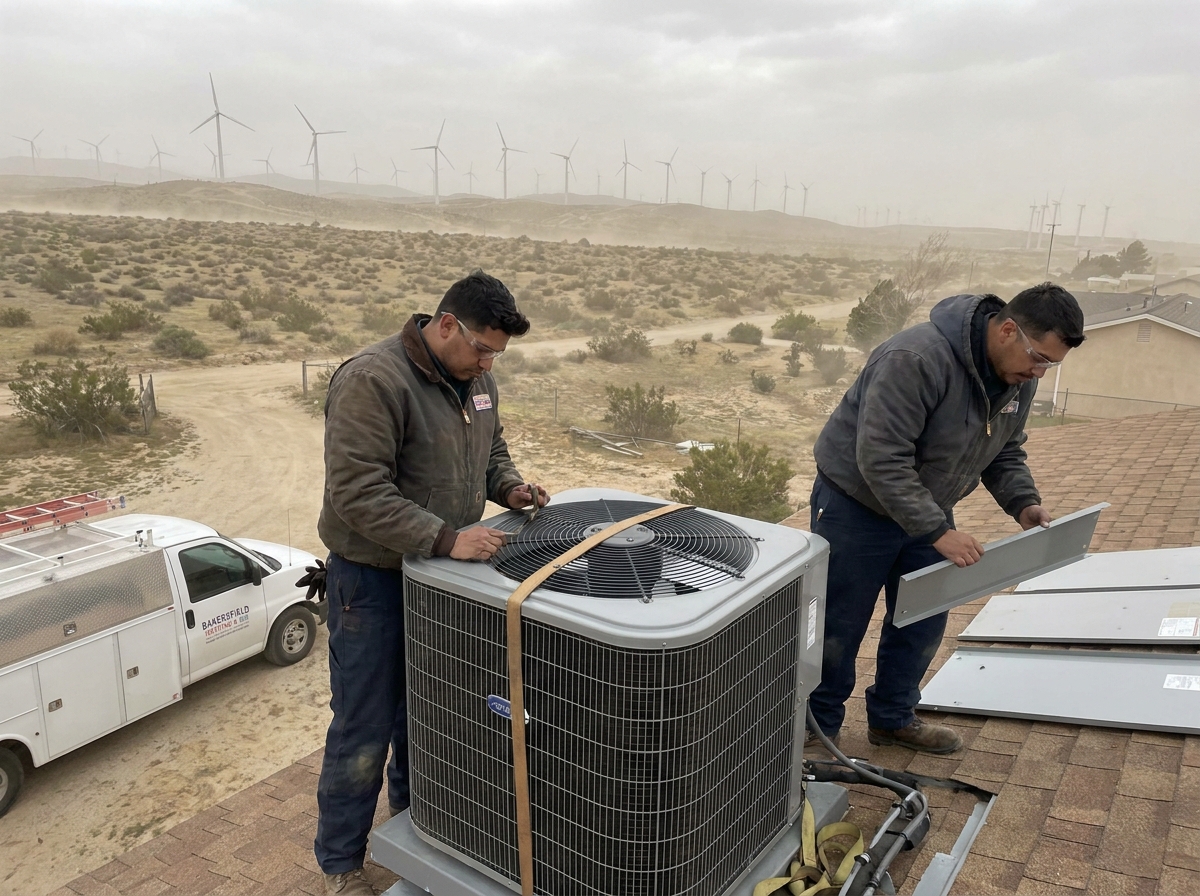
Winds channeled through the Tehachapi Pass often exceed 30 mph across Kern County and push dust, debris, and pressure changes into HVAC systems serving Stockdale, Rosedale, and Oildale. Start by turning off power to the outdoor unit, then inspect the condenser coils and fan blades for loose material that can become projectiles. Check the mounting pad for cracks that let wind rock the unit and stress refrigerant lines. These steps reduce strain on the compressor during the next wind event.
Local Wind Effects on HVAC Equipment
The hot desert climate in Bakersfield amplifies wind damage because fine sand carried from the west abrades coil fins and clogs filters faster than in calmer regions. Homes in Downtown Bakersfield and near the Kern County Museum often sit on slab-on-grade foundations where return ducts run through attics exposed to gusts. When wind pressure drops outside while indoor pressure stays higher, unsealed joints pull in dust that shortens equipment life. Residents in nearby Delano and Wasco report the same pattern during spring and fall wind events that follow the Tehachapi route.
Strong gusts also affect heat pumps and packaged units common in Rosedale by forcing debris against the outdoor fan grille. A quick visual check of the top discharge area before high-wind forecasts prevents bent blades that reduce airflow. In Taft and Wasco, where older housing stock has exposed refrigerant lines, wrapping lines with UV-rated insulation and securing them with UV-resistant zip ties keeps vibration from rubbing holes during sustained 25-plus mph winds.
Securing Outdoor Units Against Debris
Walk around the condenser and remove any loose items within 10 feet that wind can lift. Trim nearby shrubs so branches cannot strike the unit. On units near Buck Owens Crystal Palace or California Living Museum, where open lots allow stronger gusts, add a wind-rated louvered screen on the prevailing side if the manufacturer allows it. Never enclose the unit completely, as restricted airflow raises head pressure and shortens compressor life in the already hot summers.
After securing the area, verify the disconnect box cover is tight so dust does not enter the electrical compartment. Loose panels on units in Oildale have allowed wind-driven sand to reach contactors, causing intermittent failures that only appear after the wind stops. A 10-minute walk-around before each forecasted event prevents most of these issues.
Checking Ducts and Filters in Slab Homes
Wind pressure changes make small duct leaks pull in attic dust that later circulates through the home. In Stockdale slab-on-grade houses, locate supply vents as shown in How to Locate Supply Vents in Slab-On-Grade Homes and feel for air escaping at joints while the system runs. Seal accessible gaps with mastic rather than tape, which fails faster under pressure swings.
Replace the filter before wind arrives so the blower does not pull harder against a loaded filter and strain the motor. Residential HVAC Maintenance includes this step along with static pressure readings that reveal hidden leaks wind will exploit. Keep spare filters on hand during the windy season that typically runs from March through May and again in October.
When to Call for Professional Support
If you notice unusual noises from the outdoor unit after a wind event or see the system short-cycling, schedule service rather than attempting further adjustments. Emergency HVAC Service at 3601 Ming Ave covers Bakersfield and nearby cities like Delano and Taft during the posted hours. Technicians can recheck refrigerant pressures and tighten electrical connections loosened by vibration without risking voided warranties from DIY work.