2026-08-25 ·
Maintaining Heat Strips in Electric Furnaces During Cold Mornings
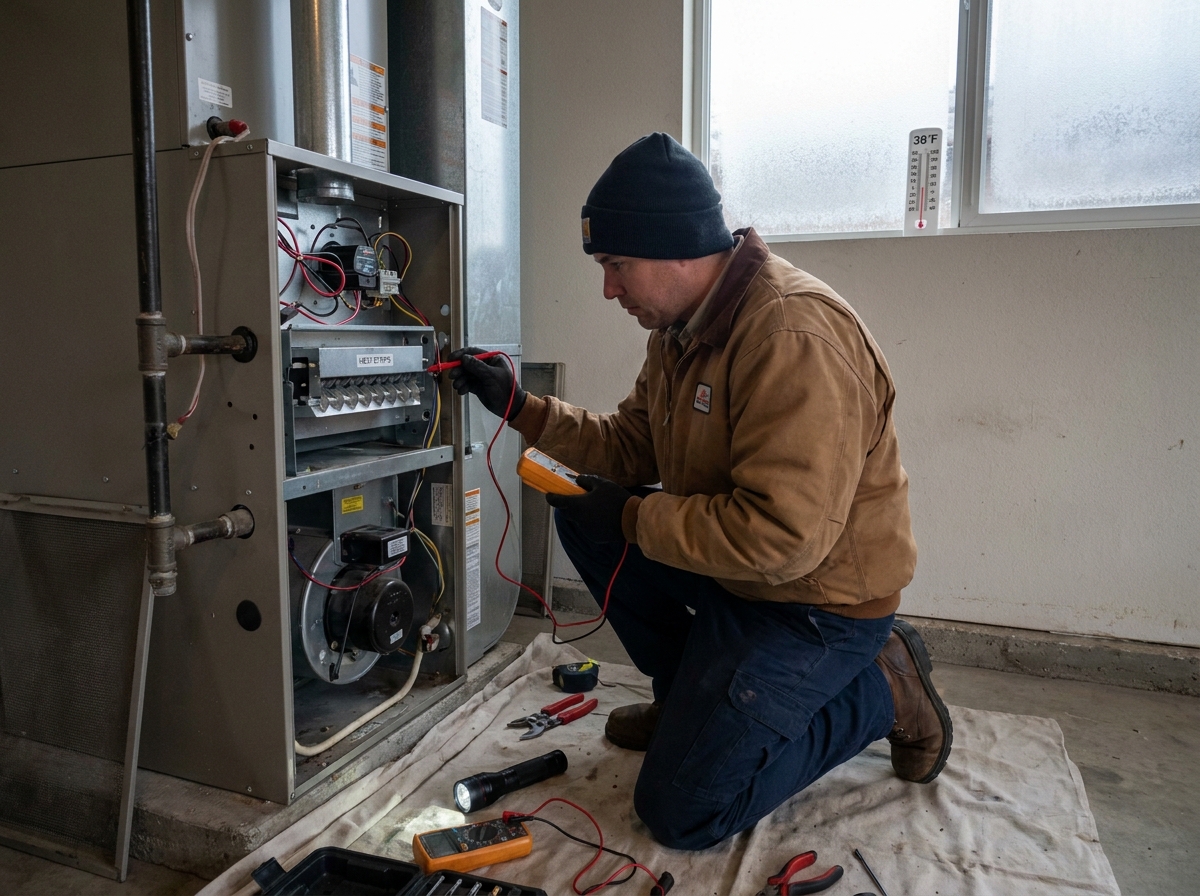
In Bakersfield, heat strips in electric furnaces require seasonal visual inspections and electrical testing before winter mornings arrive, especially when overnight lows fall below 45°F in areas such as Stockdale or Downtown Bakersfield. This approach catches oxidation or loose connections early, keeping systems responsive during the brief cold snaps that follow the region's hot desert summers.
Local Climate Effects on Electric Furnaces
Bakersfield's Kern County location creates sharp daily temperature swings that stress heat strips more than steady cold climates do. After 90°F+ summer days, a sudden 35°F morning forces strips to cycle harder, accelerating wear on the nickel-chromium elements inside the furnace cabinet. Homes in Oildale and Rosedale often feature 1970s–1990s construction with original electric furnaces still in place, where dust from nearby agricultural fields and oil operations adds to coil surface buildup. Technicians note that strips in these units commonly show pitting after 10–12 years when filters are changed only twice annually. Checking resistance with a multimeter at the start of November reveals failing strips before a 6 a.m. call on a 38°F morning leaves a household without heat. The same climate pattern affects nearby cities such as Wasco and Delano, where similar housing stock sees comparable strip degradation rates.
Inspection Steps for Cold Morning Reliability
Begin by turning off power at the furnace disconnect and removing the access panel to expose the heat strip assembly. Measure each strip's resistance against the manufacturer rating—typically 10–20 ohms per 5 kW element—and replace any reading outside that range. Next, inspect the sequencer or control board for burnt terminals, a common failure point when morning humidity from the Kern River basin combines with dust. Clean the blower wheel and verify the limit switch trips at 140–160°F to prevent overheating during extended runs on 30°F mornings. Homeowners in the 93309 zip code near 3601 Ming Ave can perform the visual portion themselves but should schedule a full electrical test with a local technician if strips are over eight years old. Document readings each fall so trends become clear before a strip fails during the first cold front.
When to Schedule Professional Service
If resistance values vary more than 15% between strips or the furnace short-cycles on cold mornings, contact a technician for Furnace Repair rather than attempting further DIY work. Professionals carry the proper tools to test amperage draw under load and replace individual strips without disturbing the entire heating package. In Stockdale homes with two-stage systems, mismatched strip output often shows up only during the 4–7 a.m. window when outdoor temperatures bottom out. Pairing this check with Heating System Maintenance catches related issues such as weak blower motors that reduce airflow across the strips. For readers comparing heating options during mild Kern County winters, the article Evaluating Whole-House Fans Versus Central AC in Mild Winters offers additional context on supplemental electric heat use.
Record Keeping and Replacement Planning
Keep a simple log noting date, outdoor temperature, and any unusual odors or noises during the first cold morning of each season. Strips typically last 8–15 years in Bakersfield conditions, but replacement becomes economical once two or more elements test outside spec. Ordering factory-matched 5 kW or 10 kW strips ahead of December avoids delays when morning lows hit 32°F. Residents in Taft and nearby communities follow the same schedule, as the same desert-to-cold transition affects equipment identically. Consistent records also help when discussing system age with a technician during a service visit at the shop on Ming Avenue.