2026-08-25 ·
Evaluating Whole-House Fans Versus Central AC in Mild Winters
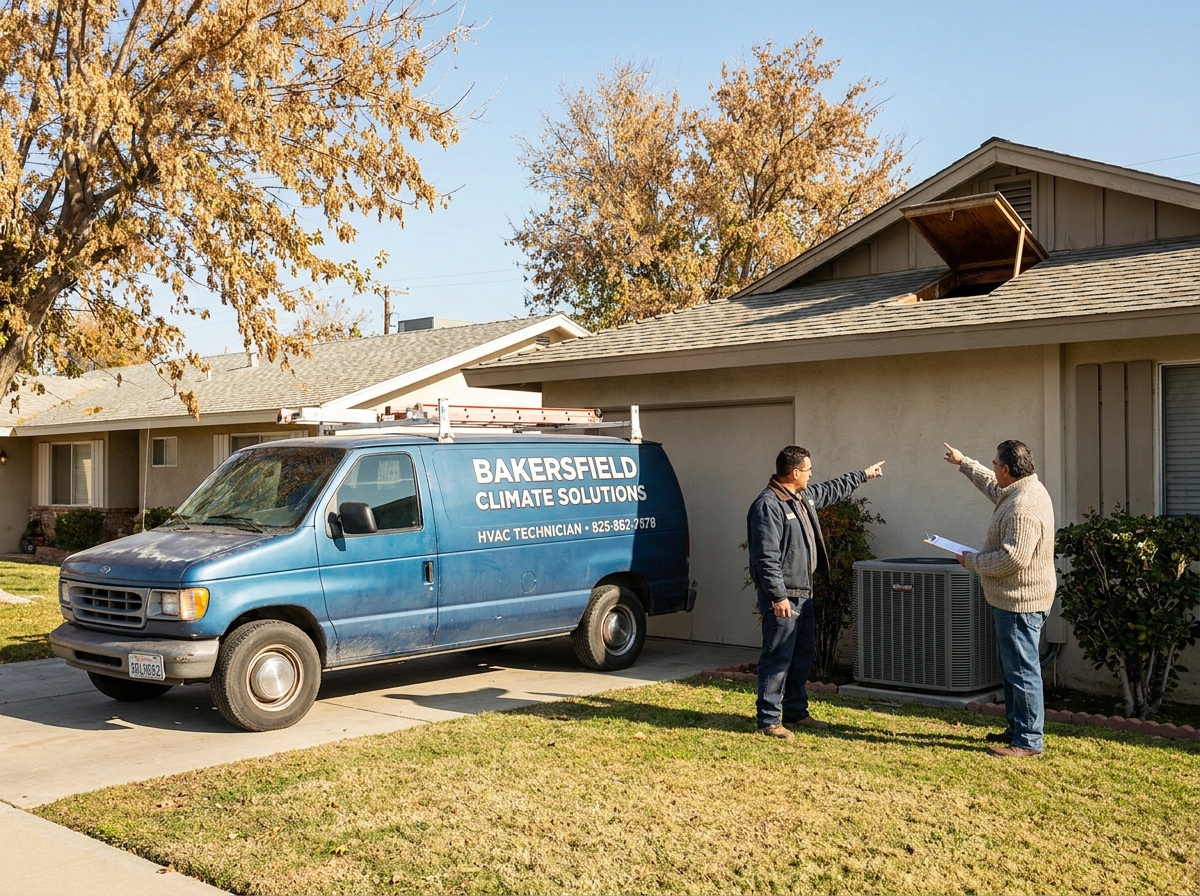
Whole-house fans deliver lower operating costs than central AC during Bakersfield's mild winters when overnight temperatures drop below 75°F, often saving $30–$60 per month on electricity for homes in Stockdale and Rosedale while still providing 8–12 air changes per hour.
How Bakersfield's Climate Affects Both Options
Kern County's hot desert conditions create short, mild winters with daytime highs around 60–68°F and rapid evening drops. This pattern favors whole-house fans in Downtown Bakersfield and Rosedale because they pull cooler outside air through open windows without running a compressor. Central AC units cycle less in these months yet still consume 3–5 kW when they do run, especially in older tract homes built before 1990 that lack modern duct sealing. Homeowners near the Kern County Museum notice the difference most on nights when temperatures fall into the low 50s, allowing fans to maintain comfort with windows open until 10pm.
Energy Use and Operating Costs in Mild Winters
A whole-house fan rated at 1/3 to 1/2 horsepower draws 300–500 watts and runs 4–6 hours on mild winter evenings to clear heat built up from the day's sun. Central AC, by contrast, pulls 3,500–4,500 watts during any cycle and requires a thermostat setpoint no higher than 78°F to stay comfortable in Oildale's denser housing stock. Over a typical December through February stretch, the fan approach can reduce seasonal electric use by 40–60% compared with keeping central AC on for humidity control. Local power rates make the difference visible on bills when usage stays under 800 kWh for the winter quarter.
Installation and Home Compatibility Factors
Whole-house fans fit best in single-story homes with accessible attics and gable or roof vents already present in Rosedale and Stockdale neighborhoods. Installation takes 4–6 hours and requires a properly sized opening plus a sealed attic hatch to prevent conditioned air loss. Central AC systems need existing ductwork sized for 400 cfm per ton and a 220-volt circuit; many pre-1980 homes in Taft and nearby Delano require panel upgrades before replacement. Both options benefit from an energy efficiency audit that measures actual leakage rates before deciding which path matches the house.
Maintenance Needs Across Seasons
Whole-house fans require only annual blade cleaning and motor lubrication, tasks that take under 30 minutes. Central AC demands coil cleaning, refrigerant checks, and filter changes every 30–60 days during the long Bakersfield summer. Residents who switch to higher-MERV filters often notice improved air quality but slightly higher static pressure; see what homeowners notice after switching to a higher MERV filter for local examples. Keeping up with residential HVAC maintenance prevents the compressor short-cycling that becomes common when mild winter use transitions abruptly into 100°F+ days.
When Central AC Remains the Practical Choice
Central AC handles the 105–110°F stretches that arrive each summer more reliably than fans alone, especially in larger homes or those with west-facing windows in Oildale. Whole-house fans cannot lower indoor temperatures below the outdoor dew point and may introduce pollen or smoke during wildfire season. For households that need precise humidity control or have respiratory concerns, keeping the central system serviced and adding a smart thermostat provides the margin that fans cannot match once temperatures climb past 95°F.