2026-08-25 ·
Inspecting Attic Insulation After a Bakersfield Heatwave
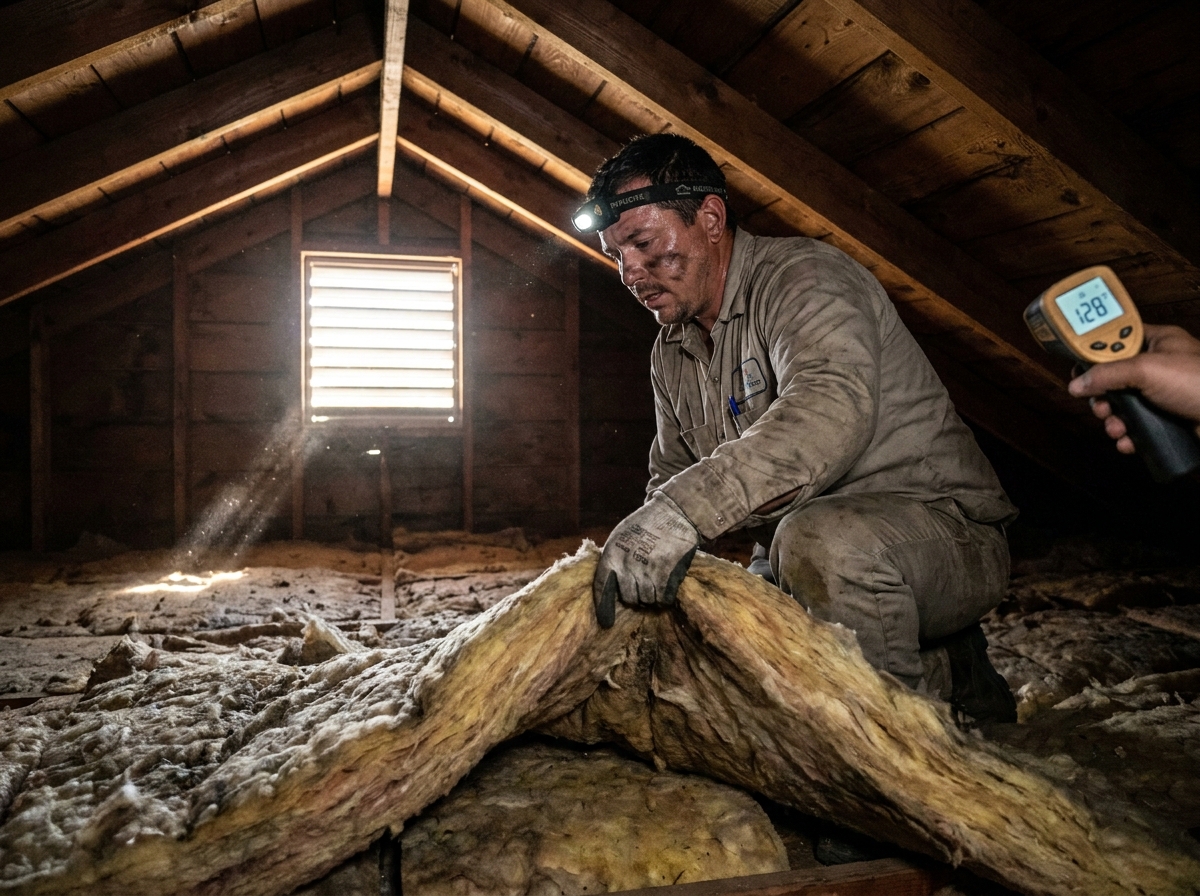
After a Bakersfield heatwave, inspect attic insulation within 10 to 14 days by climbing into the space and looking for compressed or displaced material around rafters, especially in older homes common to Oildale and Downtown Bakersfield. The hot desert climate with very hot summers often pushes attic temperatures above 130 degrees, which can cause fiberglass batts to settle or lose loft faster than in milder regions. Homeowners in Stockdale and Rosedale notice this pattern after prolonged stretches above 105 degrees because the intense solar load radiates through standard roof decks and overwhelms standard R-30 or R-38 layers. Checking now prevents higher cooling loads once the next heat spell arrives from the direction of Taft or Delano.
Visible Signs of Heatwave Damage
Walk the attic floor and shine a headlamp across the insulation surface to spot areas where material has flattened or shifted away from the top plates. In Kern County homes built before 1990, cellulose often cakes or develops crusty surfaces after repeated extreme heat cycles, reducing its ability to block heat gain. Look for dark streaks near recessed lights or bathroom fans that indicate the insulation has pulled back, creating direct paths for attic heat to reach living spaces below. Homes near the California Living Museum or Buck Owens Crystal Palace frequently show these patterns because many retain original insulation that was never upgraded for desert conditions. Measure the depth in several spots; anything below the original installed height signals compression that will raise indoor temperatures and strain HVAC systems serving neighborhoods like Rosedale.
Safe Access and Step-by-Step Checks
Turn off power to attic fixtures at the breaker before entering, then lay sturdy boards across joists to distribute weight and avoid crushing insulation or falling through ceilings. Start at the access hatch and move outward in a grid pattern, noting any gaps larger than two inches around chimneys, plumbing vents, or electrical boxes. In two-story homes common in Stockdale, pay extra attention to the knee-wall areas where insulation can slide down during heat expansion and contraction cycles. Use a moisture meter on the underside of the roof deck if you see dark spots, since heatwaves sometimes coincide with rare humidity spikes that allow condensation once temperatures drop at night. Document findings with photos so you can compare conditions after the next stretch of triple-digit days.
Local Factors That Affect Insulation Performance
Kern County soil and wind patterns add extra stress because dust from surrounding agricultural areas infiltrates attics through soffit vents, coating insulation and reducing its R-value over time. Older housing stock in Oildale often has knob-and-tube wiring that limits how much new insulation can be added without professional evaluation. After a heatwave, residents in Wasco and Delano report faster degradation in south-facing attics because those roofs receive the longest direct sun exposure. Pairing an insulation check with an energy efficiency audit helps identify whether ductwork in the same space also needs attention before the next summer peak. For homes showing widespread settling, reviewing related guidance on troubleshooting noisy air handlers in two-story homes can reveal how insulation loss contributes to uneven airflow and higher energy use across Bakersfield.
When to Call for Professional Follow-Up
If inspection reveals moisture, large voids, or insulation that has turned brittle, schedule a technician visit rather than attempting repairs yourself. Local crews familiar with Kern County conditions can assess whether adding blown-in material over existing layers will restore performance without trapping heat or creating new moisture problems. This step matters most for properties near the Kern County Museum where many structures date to the 1950s and 1960s and still carry original insulation. Keeping records of what you found helps any future service call focus on the exact areas affected by the recent heatwave instead of guessing at the overall condition of the attic.