2026-08-25 ·
Checking Refrigerant Levels After a System Recharge
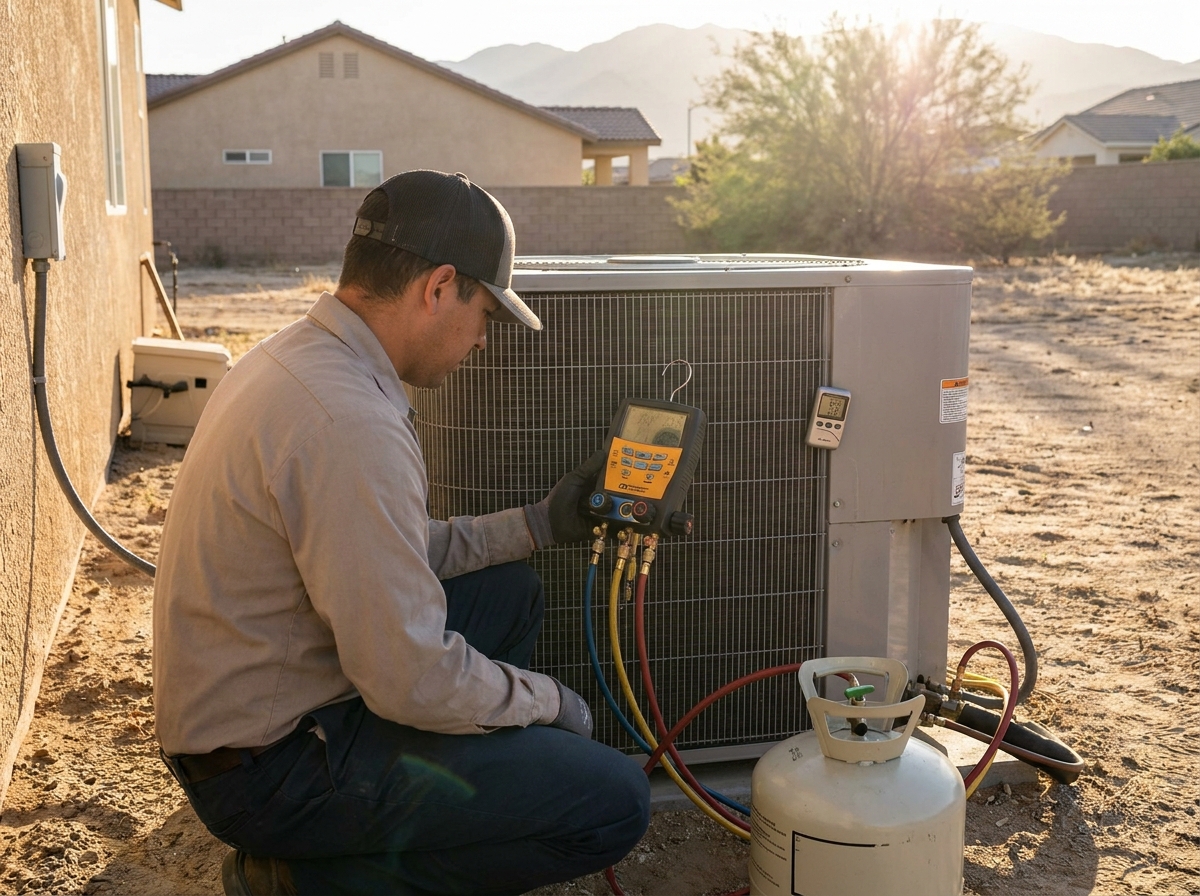
After a system recharge, verify refrigerant levels by connecting manifold gauges to the service ports and comparing high- and low-side pressures to the manufacturer's chart adjusted for the outdoor temperature, which often exceeds 100 degrees in Kern County during summer. This confirms the charge is neither under nor over, avoiding inefficiency or damage in homes across Downtown Bakersfield and Oildale where older housing stock places extra load on aging compressors. Local technicians note that desert conditions accelerate refrigerant loss through micro-leaks in copper lines exposed to extreme heat cycles.
Importance of Post-Recharge Checks in Hot Desert Conditions
Bakersfield's very hot summers push central air systems to run longer cycles, making accurate refrigerant levels critical for maintaining efficiency in single-story ranch homes common in Rosedale and Stockdale. An improper charge after recharge can cause the evaporator coil to freeze or the compressor to overheat, shortening equipment life in areas with high dust from nearby agricultural zones. Technicians working from 3601 Ming Ave routinely see systems in Taft and Delano that lose charge faster due to soil movement shifting foundations and stressing line sets. Checking pressures at both 8am and midday reveals how temperature swings affect readings. This step also identifies if a leak developed during the recharge process itself. Residents in Wasco often report higher energy bills when levels drop even 10 percent below spec during peak heat.
Tools and Step-by-Step Verification Process
Start with digital manifold gauges rated for the refrigerant type in the system, along with a thermometer to measure superheat and subcooling at the outdoor unit. Connect the gauges to the low- and high-side ports while the system runs in cooling mode, then compare readings to the pressure-temperature chart for the current ambient temperature recorded at the California Living Museum area. Calculate superheat at the evaporator and subcooling at the condenser; both should fall within the manufacturer's 8-15 degree range for most R-410A units serving Kern County homes. Run the system for at least 15 minutes before final readings to stabilize conditions. Document pressures at startup and after 30 minutes to spot any rapid drop indicating a leak. This methodical approach prevents callbacks in neighborhoods where afternoon winds stir additional dust into outdoor coils.
Local Factors Affecting Accuracy and Next Steps
Soil conditions in Oildale and older Downtown Bakersfield lots can shift line sets over time, altering pressures after a recharge even when initial readings look correct. Homeowners should schedule a follow-up check two weeks later during sustained 95-plus degree days to confirm stability. If levels have dropped, the next step is targeted leak detection rather than another recharge. Refrigerant Leak Repair addresses the root cause before repeated top-offs damage the compressor. Pairing this verification with annual Residential Hvac Maintenance helps catch issues early in high-use systems. For homes considering efficiency upgrades, reviewing related guidance on whole-house options provides additional context for long-term cooling strategies in the region.