2026-08-25 ·
Testing Smoke Detectors Tied to HVAC Systems
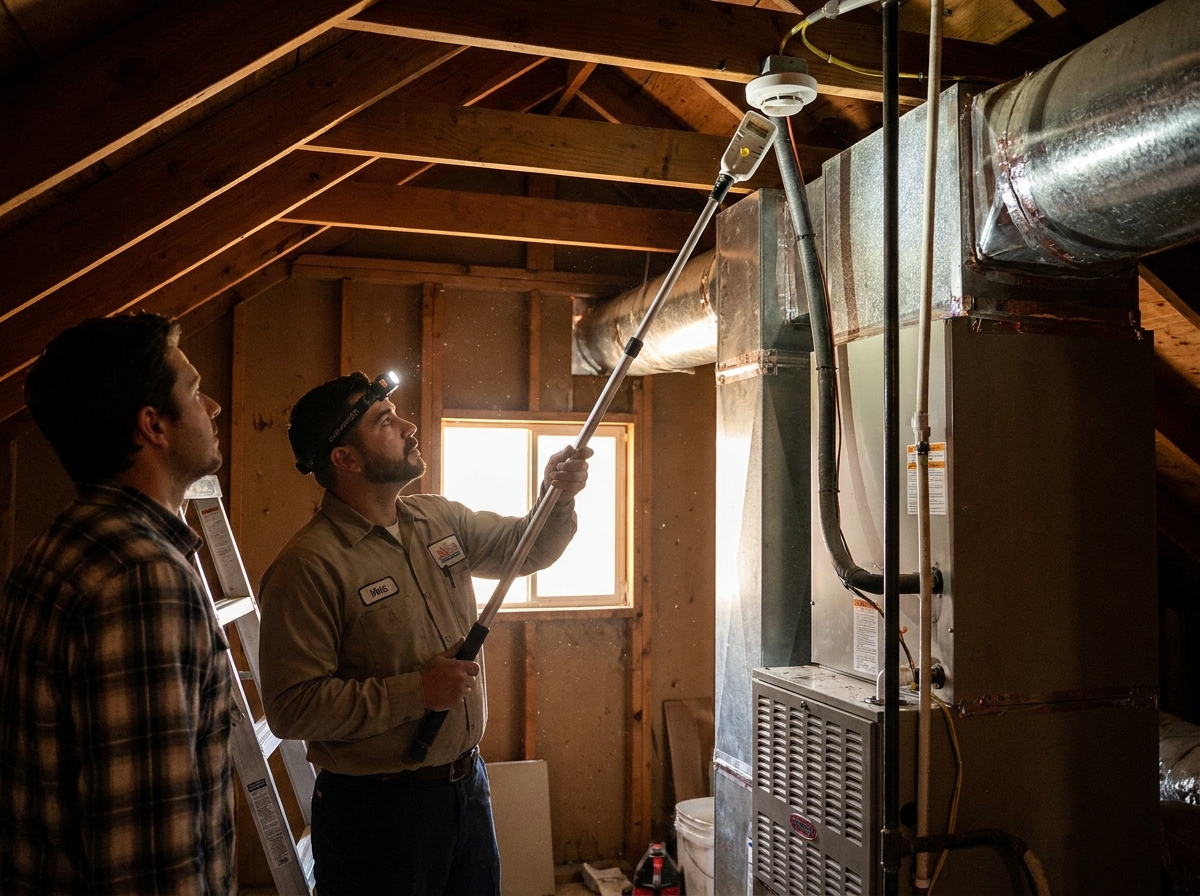
Smoke detectors tied to HVAC systems in Bakersfield should be tested monthly by activating the test button while the unit runs and confirming the alarm triggers without shutting down airflow. This catches wiring faults or sensor drift common in homes where central systems operate 10-plus hours daily during peak heat.
Integration Basics in Kern County Homes
Many homes built before 1990 in Downtown Bakersfield and Oildale tie smoke detectors directly to the HVAC control board so an alarm can shut down the blower and prevent smoke spread through ducts. The hot desert climate pushes systems hard from May through October, increasing vibration that loosens connections over time. In Stockdale and Rosedale subdivisions, 40-year-old single-story ranch houses often share one detector circuit between the furnace closet and return-air plenum. When summer temperatures hit 105 degrees, continuous fan operation raises the chance of false trips if the detector is dusty. Testing verifies both the 9-volt backup battery and the 24-volt HVAC relay still close the circuit properly. Residents in nearby Delano and Wasco face the same setup because builders used identical equipment packages across Kern County.
Step-by-Step Monthly Test Procedure
Perform the test on a weekday morning before 10 a.m. when outdoor temperatures are lower. Turn the thermostat to fan-on mode so the blower runs, then press and hold the detector test button for five seconds. Listen for the 85-decibel alarm and watch that the blower stops within three seconds. Release the button and confirm the system restarts automatically after 30 seconds. Repeat at every detector location, including hallway units near the air handler. Log the date and note any detector older than eight years for replacement. In Taft and Wasco homes with crawl-space ducts, also check the exterior access panel for rodent damage that can sever low-voltage wires. Keep a simple notebook near the thermostat to record each test.
Addressing Age-Related Failures in Local Housing
Homes in Oildale and older sections of Downtown Bakersfield frequently have 20-year-old detectors wired with 18-gauge thermostat cable that cracks from attic heat. When the detector fails to signal during a test, first replace the battery, then retest within five minutes. Persistent silence usually means the relay on the furnace control board has oxidized from dust pulled through the return in Rosedale's windy conditions. A qualified technician can swap the relay during a routine visit without replacing the entire board. Never bypass the detector to restore airflow, as this leaves the home vulnerable during the next high-wind dust event common in Kern County.
When to Schedule Professional Verification
If monthly tests show inconsistent shutdown or restart behavior, book a service call that includes checking the low-voltage wiring run from the detector to the air handler. Technicians familiar with Bakersfield's housing stock know to inspect the splice points inside the attic where temperatures exceed 130 degrees. Pair this check with filter changes to reduce dust accumulation on the detector lens. Homeowners in Stockdale who recently replaced their air conditioner should confirm the new control board still accepts the smoke-detector interrupt signal before signing off on the install.
Regular testing keeps the integrated safety feature working through the long cooling season without unnecessary service interruptions.