2026-08-25 ·
How Tree Pollen from Local Parks Enters Home Ductwork
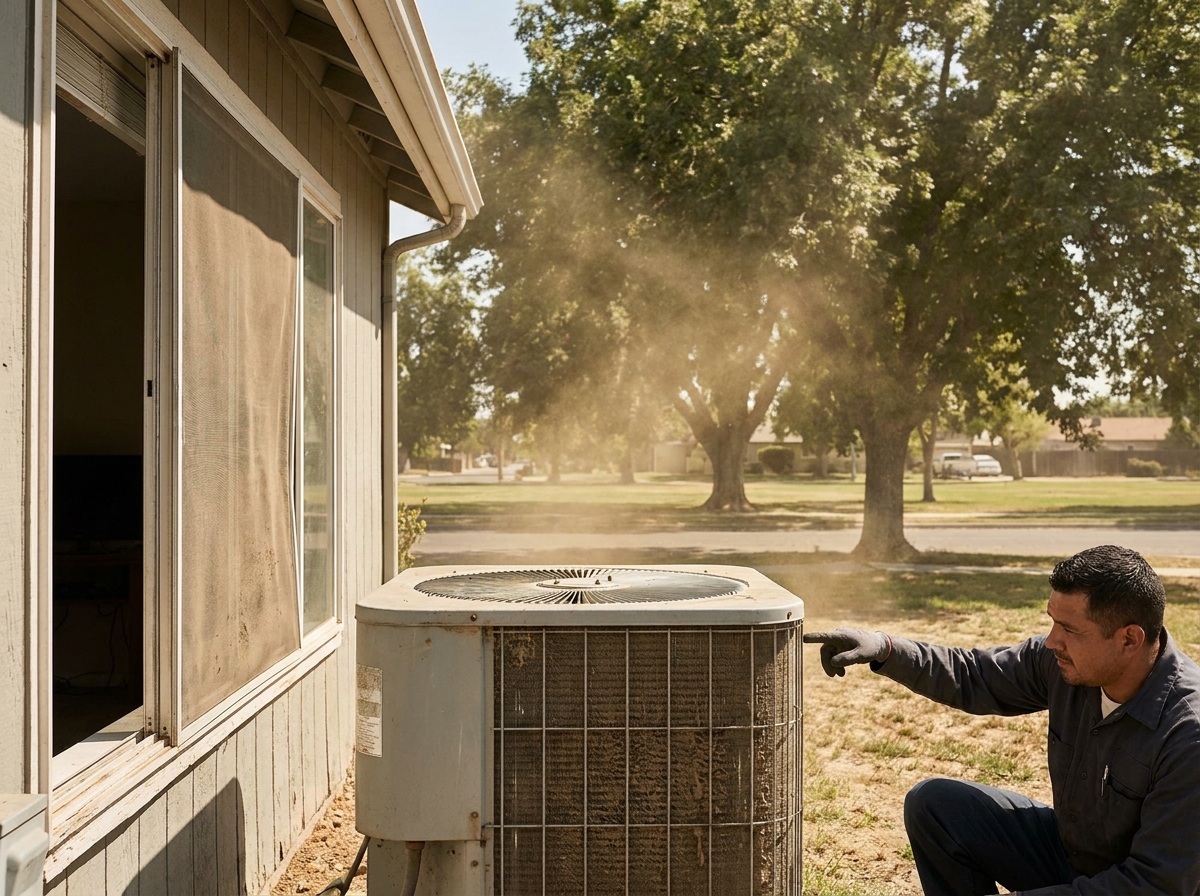
Tree pollen from local parks enters home ductwork in Bakersfield primarily through open windows and doors during spring and early summer, then gets pulled into return vents when the HVAC system runs to combat 100-plus degree days. Homes in neighborhoods like Rosedale and Oildale sit close to tree-lined areas around the California Living Museum and Buck Owens Crystal Palace, where species such as olive and mulberry release heavy loads that travel on desert winds. Once inside, pollen particles 10-30 microns in size bypass standard 1-inch filters and lodge in flex duct runs or settle on evaporator coils.
Local Tree Pollen Sources Near Bakersfield Parks
Bakersfield's hot desert climate drives early pollen release from trees surrounding the Kern County Museum grounds and California Living Museum trails. Olive trees common in Stockdale and Downtown Bakersfield produce fine yellow dust that coats surfaces by mid-March. Residents in Oildale and nearby Taft notice heavier loads because prevailing winds carry particles from these parks straight into residential zones. The same pattern reaches homes in Delano and Wasco when temperatures climb quickly after winter. These conditions mean return-air grilles in single-story ranch homes built in the 1970s and 1980s pull pollen indoors faster than newer construction with tighter envelopes.
How Pollen Travels Through Residential Duct Systems
Pollen enters ductwork when homeowners open windows for evening cooling before the AC kicks on. Negative pressure from the blower motor then draws particles past the filter and into the main trunk lines. In homes along Ming Avenue near the shop at 3601 Ming Ave, older metal ducts with gaps at joints allow pollen to escape into attics and wall cavities. Flex duct in crawl spaces common in Rosedale developments sags over time, creating low spots where pollen collects and later re-enters the airstream. During peak summer, systems run 12-14 hours daily, moving pollen through every room multiple times before it finally sticks to coil fins or gets trapped in carpet.
Effects on HVAC Performance in Kern County Summers
Accumulated pollen on evaporator coils reduces airflow and raises energy use as the system works harder to maintain 78 degrees inside when outside readings hit 105. In Oildale homes with 30-year-old ductwork, restricted coils can shorten compressor life by forcing longer run times. Pollen also feeds mold growth once humidity spikes from occasional irrigation or swamp cooler use. Homeowners in Stockdale report musty smells by late July when pollen layers combine with dust from nearby agricultural fields. Regular operation without addressing buildup leads to higher static pressure readings and uneven cooling between upstairs and downstairs zones.
Practical Steps to Reduce Pollen Entry
Upgrade to a MERV-13 filter rated for the specific tonnage of your unit and change it every 30 days during peak pollen months. Schedule professional duct cleaning to remove settled layers from trunk lines and branch runs before they recirculate. Pair this with indoor air quality improvements such as UV lights on the coil that break down organic particles. Keep windows closed from 10am to 6pm when pollen counts peak, and run the system fan on continuous low speed only after fresh filters are installed. Check return vents in high-traffic rooms monthly for visible yellow dust.
When to Call for Professional Assessment
If family members notice increased allergy symptoms after the AC runs or if airflow feels weak in rooms farthest from the furnace, book an inspection. Technicians can measure pressure drops across the coil and identify pollen-packed sections in the return plenum. Homes in Rosedale built before 1990 often need sealing at duct joints plus filter upgrades to stop ongoing infiltration from nearby park trees.