2026-08-25 ·
How Construction Dust from New Subdivisions Affects Nearby HVAC
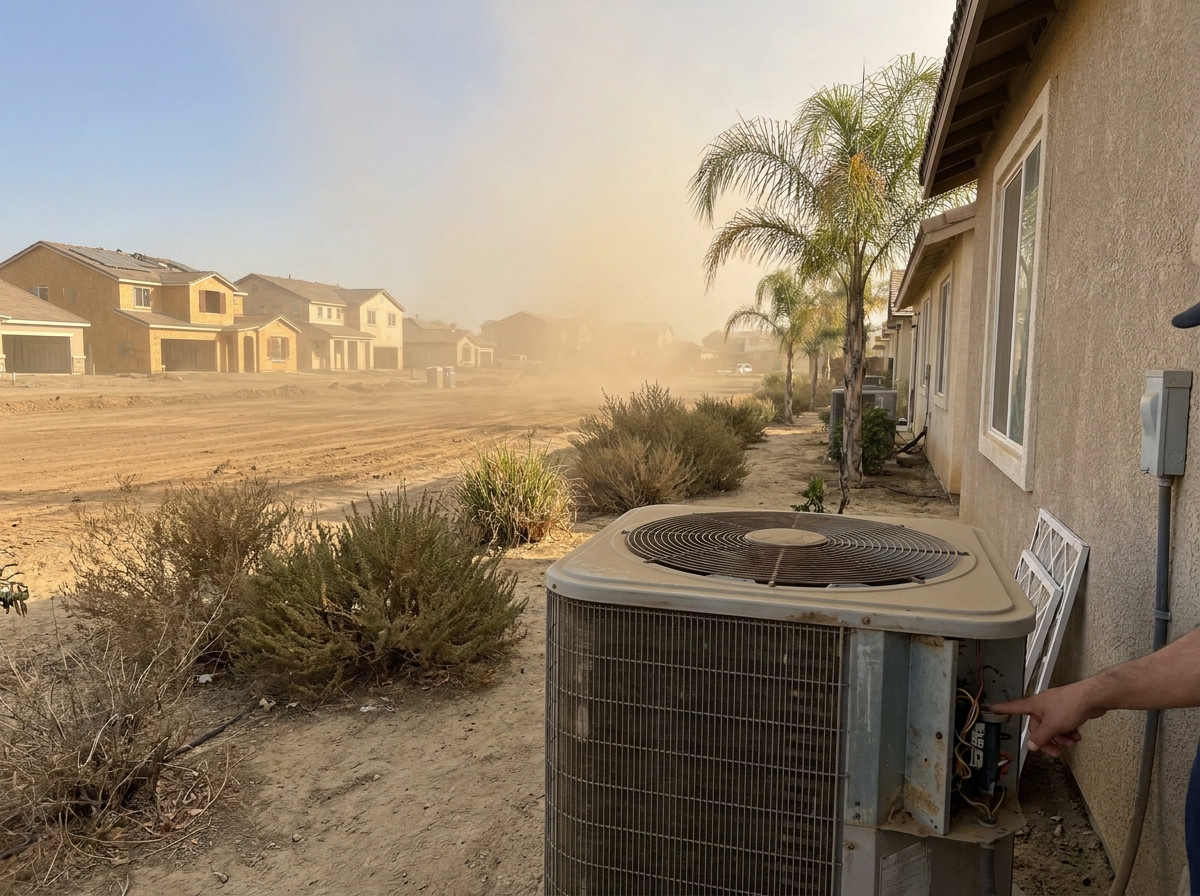
Construction dust from new subdivisions in Bakersfield settles into HVAC systems serving homes in Rosedale, Stockdale and Oildale, cutting airflow and raising operating temperatures on compressors during the county's long hot summers.
Dust Pathways into Residential Systems
New subdivisions often break ground on the edges of Rosedale and near Oildale where older single-story homes sit close to active grading. Fine silica particles travel on prevailing winds and enter through open windows, dryer vents and the return-air intakes of central systems. Once inside, the dust coats evaporator coils and lodges in the pleats of standard 1-inch filters, reducing the effective filter surface area within days. In Stockdale, where many homes built in the 1970s still use original ductwork with unsealed joints, the dust migrates farther into supply runs and collects at elbows and registers.
Strain During Peak Summer Loads
Bakersfield's desert climate pushes outdoor temperatures above 100 degrees for weeks, so cooling equipment already runs long cycles. Added dust resistance forces the blower motor to pull more amperage and raises refrigerant pressures inside the condenser. Homeowners notice the air coming from vents feels less cool even though the thermostat setting has not changed. Over time the extra heat shortens compressor life and increases the chance of capacitor failure on units that have not had recent maintenance.
Neighborhood Differences Across Kern County
Rosedale sees the fastest new-home growth, so dust events there tend to last longer and affect more homes at once. In contrast, older blocks near Downtown Bakersfield experience occasional dust when wind carries material from distant sites, but the impact is lighter because fewer return intakes face open fields. Homes in Oildale near Taft Highway report heavier soil dust mixed with construction fines because the terrain is flatter and wind speeds stay higher. These differences mean filter change intervals can vary by several weeks depending on exact location within the county.
Practical Steps Homeowners Can Take
Check and replace filters every two to three weeks while grading is active instead of the usual monthly schedule. Seal obvious gaps around return-air grilles with foil tape to limit bypass air. Keep windows closed on the side of the house facing the construction site during the hottest part of the day. After the subdivision work moves farther away, schedule a professional duct cleaning to remove accumulated fines before they recirculate during the next cooling season. Residents in Delano or Wasco who commute through active sites can also benefit from the same filter discipline even if their own street is not under development.
When Professional Service Becomes Necessary
Persistent weak airflow or unusual noises from the indoor blower after filter changes usually indicate dust has reached the coil or blower wheel. At that point a technician can measure static pressure across the system and decide whether coil cleaning or duct cleaning will restore performance. If indoor air quality concerns rise, an indoor air quality improvement assessment can identify whether a higher-MERV filter or additional filtration is appropriate for homes near ongoing construction. For systems that have already run through an entire summer with heavy dust loading, a full inspection helps prevent small issues from turning into mid-season breakdowns when temperatures climb again.